TurboHire launches its new brand identity! Know more

Digital Transformation in Recruitment:An Idea or the Present?

I grew up in a family where they were primarily programmers by heart and that’s how I got into programming.

https://fast.wistia.com/embed/iframe/l9d5sw57d0

I am not an engineer by study but got into programming due to my passion. I had an accounting major when I got out of school and I wanted to pursue the IT side of my studies and have also done some basic programming. So I had this interest in programming which led me to Oracle. So, long story short, I started my journey as an IT site developer, then moved into Oracle, which is what I came into this country to do, oracle database programming. When I entered Oracle, data was then starting to be recognized as the key to making a lot of decisions for the industry, and for all levels of departments. I came in when data was everywhere, meaning it was primarily in mainframe computers at that point in time and also in some relational databases that were emerging at that time. Oracle was one of the dominant ones when I came in in terms of databases. So it fits in well because of the programming background that I had in Oracle.

One of the jobs that I did when I came into this country was primarily to do the data cleansing side of It, basically picking data from various sources and then putting them into these humongous data warehouses that these companies were building, all of my clients. So that’s how I got a break into coming into the US. And that’s where my career journey started.

I entered this very small company where hiring was very specific for individuals with skills in data and data programming primarily. So I had actually volunteered to get into the interviewing and also trying to see how it can help my company select the right set of folks for all the programs or for all the clients that we are actually implementing the tool that we had a partnership with. Having said that, I think I was doing good in terms of getting the right matches into the company. And that’s when my earlier principal asked me to consider this as more of a full-time job, because he really needed somebody to anchor their recruiting function, and he never had a thought of actually hiring somebody as a recruiter, so he really needed somebody to do that. So having said that, that recruiting bug bit me because I really love the intersection where I can have a robust technical conversation yet I knew very well that I was fulfilling the needs of the company by hiring the right set of folks. I think that’s how my career in recruiting started back in 2000. So it’s been almost 23 plus years since I’ve been in recruiting industry and obviously, things have changed significantly from then.

I had this ability and the unique understanding of both the needs of the organization and as well as the candidates which help me bridge the gap.

https://fast.wistia.com/embed/iframe/ypwxj1mcy2

I was aware of what technology folks needed at that point in time which helped me bridge the gap between both the needs of the candidates and the organization. This was one of my USPs throughout the HR journey. In simple words, I could put myself in their shoes and understand what is it that they need not only just through the recruiting side but also technology-wise.

I also kept pace with industry trends on both the recruiting and technology side, while not at the level of a coding expert but still catching up with the news also helped me to communicate with candidates well. Even the candidates wish to converse with people who have a bit of knowledge in their field and empathize with them. So that has definitely helped throughout my journey.

I think it is a unique skill that a recruiter has where they balance both the needs of the company you are working for and understanding the candidate’s needs.

https://fast.wistia.com/embed/iframe/8s0t8gkfaw

As a recruiter, you are working for a company and that becomes your priority, hence it becomes important to understand the priorities of the organization. I think for the technology side, for the candidates, you really have to act as the candidate evangelist to the company. Sometimes it might be that you have certain specific constraints that you are working within the particular group that you’re serving. So that is something that you’ll also have to keep in mind. You have to work to be that real intersection of bringing both these people together and having to make a match, and recruiters are the face of the company, so they really have to put their best foot forward in terms of representing the company. Especially because they are brand ambassadors, well that’s how I look at myself when I play the role of a recruiter.


Candidate experience has multiple elements to it and it starts right from the get-go meaning how a company is projecting the demand over to a candidate in short how well the job description has been written.

https://fast.wistia.com/embed/iframe/a9fvwhg3u3

Quite a lot of times, organizations tend to use fancy words to attract candidates, however, what candidates actually require is not fancy words, instead, they want to know the basics of the rule they are looking for. For example, what will the job entail and how much the candidate will acquire through the job? Apart from this, candidate experience is also not just about how well the job description has been written but it will also entail how well you have described your organization’s culture. They might check in on the career microsites of these organizations and check what particular groups in the organization have achieved and what were the contributions of these organizations. And that’s what is important from a candidate’s perspective.

And then it also depends on the panel interview. If you can map the journey for a candidate saying during this interview process, the candidate certainly appreciates it’s not about the length of the process, it’s about articulating the exact process right. That becomes the main job of the candidate or of the recruiter to make sure that the experience is clearly lined out, which is what a candidate appreciates when you’re going through a process like that. Simple engagement such as even a small mail sent to the candidate also works towards building the candidate’s experience.

He then becomes your ambassador for the company by actually talking to his peer group and saying, hey, I had a fantastic experience. I did not take the job for whatever reason. But I think you should consider this company. I think that is a very strong and powerful discussion that these candidates are having behind your back, because they are not obviously coming and evangelizing to you saying that, hey, but the positive ones are the ones that will lead a lot more traffic to you. And that is what is important. So this brand that you’re trying to build is done by a sum of a lot of micro experiences across the board. And as I have narrated, it’s not just one person doing it, it is like multiple people and clear communication that carries this whole experience forward.

One thing you might want to look out for would be checking your connections. There is an immense amount of power in social networking and how it will help you land a job.

https://fast.wistia.com/embed/iframe/5wx52bab1f

I think one of the biggest guilt that we all have is bulk applying for jobs. There are candidates that feel like they need to apply for 100 jobs today but that is not the right approach. This also leads to organizations getting a lot of candidates where most of them might be irrelevant to the job. I think the one way to avoid it is to make sure you curate and you put together a good job description. And also from the candidate perspective, I do know the current trend right now in 2023 is that there are a lot of candidates available because of all the layoffs that at least on the it side, that you are seeing a lot of them. I think it’s understandable that the candidate wants to jump into the first available one and that becomes a trigger point for them to apply against it. If there is one piece of advice or one thing that I would want to leave with the candidates is like, to look for the one that you feel more closely attached to rather than going and applying against a volume.

And in this, I think the power of social networking is immense, right? Look for your connections. Look for the connections that you can speak to, and reach out to, so you can understand the culture of the company, you understand the trajectories that they have each of your references carried within this company. That makes a powerful statement because to stand amongst the crowd, it is very important that you put together a much more cohesive approach to a job-seeking endeavour rather than just fire away and then let’s see what sticks, right? I think that approach never is it has never worked, really speaking. And I think that will even on the candidate side of it, it will make sure that their experiences when they apply against them, they don’t go through the same frustration of hiring by applying by volume because it’s never a good thing.

What Millennials and Gen Zers require currently is beyond a job. They are trying to look for a bit more responsibility from the corporation also called the CSR or social responsibility of a corporation.

https://fast.wistia.com/embed/iframe/5wx52bab1f

One thing that all talent professionals are doing currently is stepping into the shoes of Millennials and Gen Zers to understand their wants and requirements. And as far as the candidates are concerned they are looking for contributions to a corporation where a cause is being fulfilled. Causes don’t have to be big words or heavy words, but it’s about the right words for them. Where they are doing things that are making an impact on what their thing is.

I think that is very important and I see nothing wrong with that expectation. But I think it’s just about companies articulating that and reaching out and messaging that. Because you know and I know corporations have CSRs across the board. It’s about how they are presenting it and how they are resonating with it. How you are actually broadening that outreach in terms of the message? That’s important. So I think this is a challenge that will be ongoing and I think now it is Gen Z who have specific values that they want to be reflected in jobs and the roles that they perform. But I think there will be another millennium that will come in and it will have the same thing. I think you just have to as a talent professional, you just have to understand their point of view. You might not be there yet as a company to align with everything that is there, but whatever you are aligned to, I think it’s important that it gets articulated and it gets presented in the right way time and time again so that that pool of talent resonates with what the company’s goals are.

AI is definitely helping talent professionals to sort out their repetitive mundane tasks, however, with unknown problems arising, it is needed that there is a human touch to this problem which is where AI cannot take over.

https://fast.wistia.com/embed/iframe/3dgit741ei

I have got a certification from MIT, especially regarding how AI is impacting business strategy. I was very curious because I think I was wanting to find out what it is because as professional talent professionals, the impact of AI in HR technology is enormous because it has helped talent professionals in significant ways, the tasks that are deemed very mundane and not really a lot of value add. Like simple things like interview scheduling, calendar scheduling, and simple basic responses. They are all handled nowadays by chatbots. Because this never existed when we started off. But think about candidate experience. A person comes into the job, you see it’s a very common feature nowadays when somebody comes in into a website. The first thing that you see on the right-hand side is a chatbot that helps you say how can I help you navigate the journey of your search, right? And this never existed. Meaning that’s the way immediately an AI is making an impact wherein they are at least starting to engage. That engagement is important because otherwise you can do a Google search and you can find some jobs, but you’re not engaging with the candidate, is not engaging with the company. But you have seen the tools also sometimes are not the best in terms of solving every problem or every question that gets thrown at you. And it’s very hard to predict for an AI tool to say what can be next. Obviously, the tools have evolved wherein it has learned over a period of time with all the Algorithms that are set in, right, they learn. However, at the end of the day, there’s definitely a need for humans to come in and then bridge the gap when AI is not able to help. And thankfully, as long as that problem exists, humans will still have a job. But yeah, you have to embrace technology. Professionals have to embrace technology for all the best possible things that it is already solving. The ones that you deem are repetitive, monotonous, simple screening questions.

Another thing is that AI cannot self-learn it needs to have some sort of data input that will help it understand what it needs to do in a particular situation. So it is in the hands of professionals who are handling the AI and the type of data that has been entered. This might also sometimes lead to an implicit bias which is based on the data that is being fed. So I think that is more of a human behaviour piece. I think that needs to be addressed by training and a basic understanding of how you don’t succumb to an implicit bias. But that is a journey that every talent professional has to go through in terms of constantly reminding yourself not to succumb to those biases that you build in.

Recruitment automation has definitely evolved where organizations have now specialized in multiple microsections of recruitment.

While there are a lot of organizations that specialize in multiple microsystems of recruitment you can see that in a corporate world, recruitment involves all touchpoints. And it’s almost impossible for one company to do the breadth of everything that we narrated. So the tools that we have, I think it’s important to recognize there are strengths in each of the tools, and then you have to use all of the tools together to get that cohesiveness built in.

https://fast.wistia.com/embed/iframe/kowsjixy9x

I think the tools have become a lot more intelligent now. Wherein in the past you could set some alerts and triggers with regard to certain skill combinations. If it comes, it would pop up. But I think nowadays, because of the intelligence that is already getting built within any of these tools, if there is this combination or if there is a perceived combination that is interesting, the tools alert itself right now those alerts come in automatically, making recruiters’ life a lot easier. Previously you need to set an alert. Now I think the alerts are being prompted based on the searches, pattern search patterns and also the kind of skills that you have been looking for in the system itself. That has become easier and I think tools have become very intuitive and that’s very helpful in terms of how the tools are enormously supporting the journey through the talent community.

I think down the line, one of the trends that I’m seeing is a lot of data-driven recruitment. And data-driven recruitment doesn’t really mean just simple metrics, but more about the trends that we are talking about. Like wherein the matching and the closeness to the match, the alertness of the systems to respond. I think a lot of this is driven by the tools that are actually giving this information and I think that’s where the future lies in terms of how to spot trends and the tools helping to spot certain trends and alerting us to the right picks that are coming in.

HR is a space that requires an immense amount of patience and to turn into a person who is willing to solve problems.

https://fast.wistia.com/embed/iframe/azjhzusub3

Since you are handling humans when we talk about the HR field, it sometimes becomes hard to handle certain aspects. For example, humans tend to change their expectations and HR as a problem solver needs to understand what are the requirements of the candidates and employees. But at the end of the day, what our human resource professional would need to have, I preach, is an immense amount of patience and extremely good listening skills both from the candidate’s perspective and also from the company’s perspective and then be very articulate in sharing. What are the real scenarios, real challenges, on both sides of the floor? Find and become the guardian of information from both the candidate as well as for the company. So you need to be having the resilience to say which ones to share, which ones to share, and which ones not to. And you have to have a thinking which will be a step ahead. You have to predict the behaviour of what the candidates can come up with and that can only be done by strong relationship building. The candidates will have to believe that you will have their best interest at heart so that they will open up to you, and share the information that is relevant. And also you can use that information to the best. In terms of trying to make sure that your company follows you along with the journey of this candidate so that you basically make both sides happy. And I think flexibility, as I mentioned is very important. Need to be extremely flexible.
Building Bonds: The Power of Buddy Programs

What inspired you to pursue a career in HR?

https://fast.wistia.com/embed/iframe/m6wpvplffx

I started as a product manager at HDFC Bank, where I worked for three and a half years before deciding to try something different. I also wanted to make some sales because that’s where you truly learn about the on-the-ground industry. But I didn’t want to do banking sales, so I went into recruitment consultancy, a 50/50 mix of B2B sales and recruiting. I ended up liking recruitment more than the sales portion of the job, which is unusual because usually, people get into B2B sales ultimately if they’ve done some consulting on the B2B side.

But I prefer recruitment. So the fundamental task of meeting new people, understanding the human mentality, selecting the appropriate people for the right job, and eventually the simple satisfaction of landing someone their dream job. That, I believe, pushed me to consider it as a legitimate professional alternative. Despite getting an MBA in finance and starting my career as a product manager, I believe I fall somewhere in the middle. I’ve also heard that some of the top HR workers do not actually come from an HR background; rather, they come from extremely atypical backgrounds because if they worked in at least one other function, they understand the business far better than most other normal HR professionals. And that educates you more than anything else because if you’ve been there, you know what it’s like.

So I’ve done product, consulting, a little bit of business-to-business sales, and certainly a little bit of recruitment along the way. And having had the opportunity to work in various areas provided me with a better grasp of what the people function is all about, how recruitment works, why they make certain decisions, and so on. As a result, I chose recruitment or talent as a function. So it wasn’t by luck, but rather by design.

What are the trends you’re noticing in the talent market in 2023, and how are they impacting talent mobility?

https://fast.wistia.com/embed/iframe/v0i9cifmks

As we all know, there is a lot of concern regarding the global recession, and things are moving slowly. Because of the significant layoffs, candidates are more likely to stay put if their jobs are safe and steady. And because of the large number of people who have been laid off or are actively looking for work for the sake of stability, most organizations that are recruiting have a large pool of candidates to select from. Now, most organizations who are recruiting aren’t really providing a significant salary increase, or perhaps because they don’t have to due to a supply-demand mismatch, such as the number of candidates available being too high vs the number of open jobs not being that many. So there’s no benefit to switching, in my opinion, where unless and until there’s anything massively major going on, most people are wanting to stay put for the time being as long as their jobs are safe.

There is a complete 180-degree turn. Back then, candidates demanded high compensation, and employers were willing to pay far more than usual in order to recruit the greatest employees. People were clearly loaded with the funding they had raised. Startups were freezing at ridiculous valuations and had that money to spend as well. The key difference now is that corporations can’t afford to pay so much, or would prefer not to want to spend such a large portion of their budget on employment unless it’s really necessary. So, I believe the bottom line is less appealing positions with much lower raises, which is also fair considering a market correction was expected.

We all knew that because companies were paying outrageous salaries a few years ago, there was a supply-demand imbalance, which is, I believe, the most serious issue and the changing priority of candidates has been stability, which has become one of the most essential things that people look for now. Because of the scare that we’ve all witnessed.

We keep hearing about hiring freeze everywhere. Why have things slowed down? What should candidates look forward to right now?

https://fast.wistia.com/embed/iframe/shckrfsuhh

As previously mentioned, I believe it is a combination of several factors, including economic uncertainty,  fear of a global recession slowing the market in general, decreasing cash flows, startups unable to raise fresh funding at the valuations they were a few years ago, and thus only raising if it is a must for survival, and with that, a priority for most is to simply sail through these difficult times.

Personally, I believe things will improve in the months to come, primarily because most startups that seek growth will need talented people to help them get there, and I believe two things will happen: companies will have to be much more strategic in terms of which roles to hire for when to do so, how much to pay, and so on. You’ll notice a shift in trend where even companies raising new funds won’t go all berserk with hiring a tonne of people. Furthermore, at some point, candidates will realize that not many organizations will offer a huge amount of hikes, so the average% salary increase will decrease and people will start accepting the new norm.

Are you somebody who vouches for work from home or are you a flagbearer of working from the office?

https://fast.wistia.com/embed/iframe/lo75ur3bz6

I prefer working from home. I think obviously you can’t comment on what’s best for everyone. It’s to each their own. I personally prefer three days from the office and two days from home. Sort of a structure. I think it works for us at Revolute, wherein we are a hybrid company, so you can literally work from wherever you want. So at times, I’ll work from coworking spaces, at times I’ll work from cafes. At times I’ll work from fence places, my own place, or wherever I feel best comfortable. And I think that helps because you’re mentally in the right space and as long as you feel good mentally, I think that should be fine. I think this is one of the few positive consequences because five years back if anybody could have imagined the hybrid work model, that shift of mindset has actually worked for a lot of us.

In very simple terms, how can recruiters identify the best talent in the market today? What are your priorities in this pursuit?

https://fast.wistia.com/embed/iframe/gsvzyknir7

The thing with recruiting is that virtually anyone can locate qualified candidates. The ability to find the crème de la crème, or as they say in recruitment, the purple squirrel, distinguishes exceptional recruiters from all other recruiters in the market.

I prioritize understanding of the role from hiring managers, we call this the ‘intake call’ and then figure out what the talent pool looks like, identify the candidates with the most ‘green flags,’ rather than just a ‘list of folks who meet the criteria,’ and then try to reach out to the majority of these first and convince them for the role.

How do you prioritize which roles to consider over others and how is the budget allocated?

https://fast.wistia.com/embed/iframe/mfwzwkr5v8

Essentially, we analyze why this requisition or function exists in the first place. For example, what will the incumbent be held accountable for? Can the company survive without this hire? Or would we have a problem with business continuity if we didn’t have one for the specific position? Is it a legislative need for fintech or banks to have this position, or are we just having it for the sake of having it because it helps us perform better? Determine whether it is a new role, a replacement, or a backfill for someone who is about to depart, is leaving, or is going on long-term leave. And, of course, we understand, and if we have someone on the team who can temporarily manage this task for specific jobs.

If not, can we at least identify someone till a replacement is found? And then, after you’ve broken it down into these, you’ll have a pretty obvious path to prioritize in terms of the.

The company’s requirement. We divide it into P0, P1, and P2, with P0 having the greatest priority and P1, P2 being lower on the priority list. So every role is assigned that tag, and we begin working on prioritizing these roles at one point in time, usually in terms of budget allocation, I believe, again, it is divided into numerous subparts.

Regarding budget allocation, it is again divided into Market standards for various positions.

Talent pool available in that place – a shortage of talent would necessitate a somewhat greater allocation than usual. The positions’ seniority The significance of these responsibilities in the business, Internal salary criteria for various roles, and so on.

As a result, particular ranges are assigned to each function, each specialization, each grade/seniority level, and each city/country.

What are your thoughts on some of the traits that a good recruiter should have?

https://fast.wistia.com/embed/iframe/z7urrhwurj

Many of my Founder friends believe it is acceptable to bring in anyone who can hire to do the TA job, and we frequently argue over why it is such an important role for their organization’s long-term growth objectives. As I previously stated, practically anyone can hire and it’s not a difficult job on paper, but I’ve found that some of the finest recruiters are those who have exceptional interpersonal skills, are fantastic at expanding their network and maintaining relationships with applicants – as if people would listen to them simply because it’s them, regardless of the post they’re pitching, great salespeople are somewhat contentious, they have excellent persuasion abilities, are excellent negotiators, can manage difficult situations and cope with pressure, and can handle the unpleasant conversations with ease and one of the most underrated is that they are not intimidated by the seniority or title of the person with whom they are conversing, they can hold their own and are usually fair and transparent.

On an individual level, what do you do to ensure everyone in your team feels included?

https://fast.wistia.com/embed/iframe/zo4qxy9g57

I believe it varies from individual to person. If you ask me, I’m someone who is quite close to the people with whom I work. I believe that on my team, I will be someone who will be checking in on folks virtually every day and doing one-on-ones almost every day. Again, as long as people can join and there are no serious difficulties with what is going on. We’ll designate a friend to each individual for their first couple of months so they know their way around.

One thing I learned from one of my friends in the HR fraternity, who I heard speak at one of the events, is that whenever he arranges a meeting, one of the things he never does is try to start with a solution to the problem that he’s going to talk about. He’ll give the floor to the team and listen to their ideas first, so that when he talks about the solution. When you talk about the answer, most people will simply not be interested. That’s fine; let’s just do it. So one of the things I started doing was to open the floor to individuals and learn what they thought should be right, if not at a tail level, at least on a one-on-one level, because not everyone thinks the same way.

What exactly is a buddy program?

https://fast.wistia.com/embed/iframe/va0l1er6cm

So we have a buddy program wherein anybody any new joiner who comes on board even before they join on our system, we’ve allocated a buddy from the team, essentially someone who’s a peer who works closely with them and helps them get through the initial few days of struggling, of understanding the tools and platforms and people in the team, the hierarchy, the kind of workload they share, the kind of rapport they have. Between the direct reports in the team and the team managers, et cetera.Essentially a friend who’s there for you, who takes care of your initial few months of casual training or informal training, if I can say, who can help you with formal stuff as well, and professional stuff, but on the other hand, helps you kind of get through the early days of a new job.

Essentially the new struggles of a new job. So that’s something that massively helps because usually when you join a new company, you don’t have too many people, you know, in most cases, you may not know anybody other than NHR or recruiter and the hiring manager. So people struggle with obviously making new friends and connecting with them. And they have to figure out who’s who, who does what’s, the seniority, someone’s what is their title, et cetera. And most people have to do a lot of this work by themselves and they end up wasting a lot of time and energy it’s not even great because they have to write cold outreaches over Slack or emails, etc. The Buddy essentially helps them get through all of that. And we support them by creating an entire process of what they should be taking care of even before someone joins.

With the rise of AI and automation, do you see HR roles being replaced by automation or do you think technology will enhance the role of HR professionals?

https://fast.wistia.com/embed/iframe/q5gadopyr8

I think people are just a bit too scared about how especially generative AI has gone about in the last couple of months. But I think it, it massively helps, you know, the HR professionals and overall the entire talent industry as a whole. I’ve seen a lot of generative AI models getting developed that help recruiters and HR folks come up with stuff that would take a lot of time and effort to actually kind of perform.  Obviously, there are downsides to that as well. There are duplication issues, there are standardization issues. There’s a worry about candidates coming up with, say, home assessments during the interview process, which are kind of generated by Charge, GPT, et cetera. So there are challenges there. 

But I think at an overall level, I think it’s massively helped. So there are generative AI tools that can help you to kind of creative content for job descriptions, create learning and development policies, create competency guides and frameworks, create candid profiles or archetypes to look for when recruiting for a specific role, and also come up with how you can get throughout of negotiations. So you can just basically come up with all sorts of solutions through that. And that’s overall, at an industry level, I think it’s massively helpful. But at the same time, I think HR being HR requires human intervention. I don’t think AI is going to impact people’s jobs to the extent

What is your advice on the skillsets required to move up the ladder in the HR domain?

https://fast.wistia.com/embed/iframe/q3wzehta0e

I feel if you’re in recruitment or the overall people space, the hard skills are pretty obvious and there’s no rocket science to that, wherein, say, for example, if you are a recruiter, you need to be good at candidate management, stakeholder management, sourcing profiles, speaking to people, meeting with people, being a bit extroverted, et cetera. Those are the obvious ones. I think most people struggle with the softer side of the skill set. 

The top five skills on the softer side, I think in my opinion, would be communication. And obviously, this is as per the report as well, the adaptability to kind of change in the business, the problem-solving skill set of kind of understanding situations and figuring out what needs to be done at that specific point in time, and relationship building. And I think, lastly, business acumen if you have the overall understanding of where the business is moving, what they need, and why they need what they need.

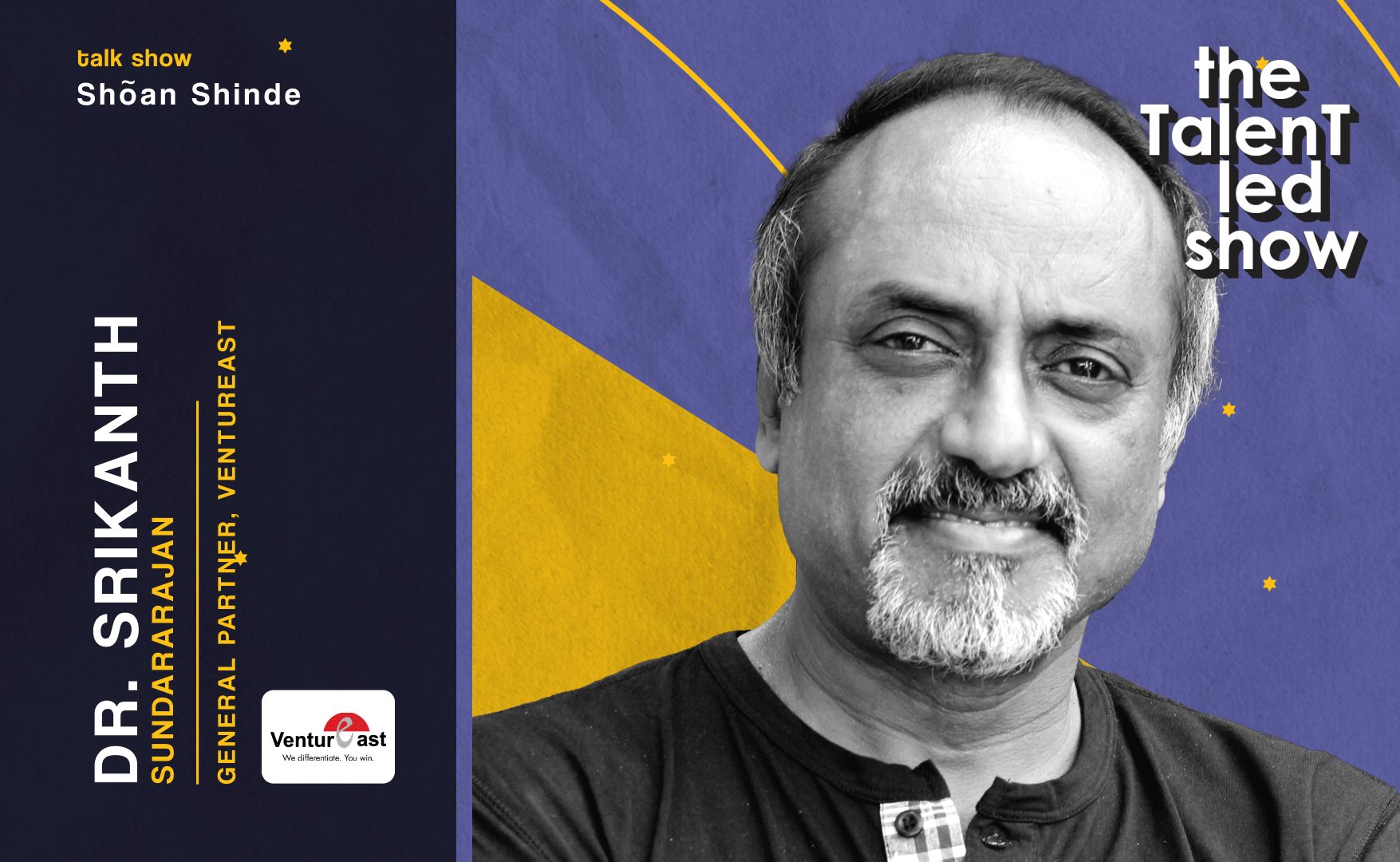
Dr. Srikanth and his journey from Silicon Valley to India

My career has always been about working with something new.

https://fast.wistia.net/embed/iframe/zin1bmkaiz?videoFoam=true

When I was pursuing my Ph.D. at UIC which is a school for computer science, there were a lot of open-source projects ongoing. We had the evolution of client servers, hardware coming up and X Windows launching. So it was really awesome to be exposed to such a research environment. I also met with a bunch of really cool US people such as Bill Jolly the founder of Son, Steve Wozniak, and Dave Packard.
If there was something new launching I’d always be a part of it. For example, there was DevOps Aviation 0.0 which was not considered very important back then but now it is a mainstream course. I have also worked as a CTO and COEs for a couple of organizations. Now that COVID is over and once you’re 60 not out you want to take a step back and start giving. So that’s where I am currently, being a part of THub and helping MSR and Telangana government.
My first pivotal moment was when I decided to build a startup. I used to work for one of the leading database companies where I earned a six-figure salary. And at that time I took this leap. Though the initial six months felt like it was a bad decision since then I’ve never looked back.

For a startup to survive it has to be agile because things are changing quite rapidly and it’s more competitive than ever before.

https://fast.wistia.net/embed/iframe/o9yd7o0rup?videoFoam=true

It was in the middle of a recession that I began my first startup. We were quite lucky to set up our office very frugally and things also were cheap at that time. Starting off we were lucky, however, within 6 months, things started falling into place. So then we could actually kind of deploy more resources, focus more and build it up. And for the first six years of that startup, we boosted because I didn’t know what venture capital was sitting in the Valley and no one knew what DevOps was. So everything was a challenge at that time. So we learned a lot during those first six years.

The potential is considered based on the traction and some customer feedback that the idea obtains.

https://fast.wistia.net/embed/iframe/3qmihi8om8?videoFoam=true

The potentiality of an idea is based on four things and can be given as:

  1. There should be a big impact
  2. The idea should be unique
  3. A minimal amount of traction
  4. Is the team well-balanced?

So you have to be very precise when it comes to investing and knowing about the potential of a startup.

Leadership skills and the engagement of leaders with each member individually will play a role in building a team.

https://fast.wistia.net/embed/iframe/4snqfmgkgv?videoFoam=true

I recently built a team where I included really good mentors. One thing you have to keep in mind while building a team is that you have to be able to sell your vision and dream and people need to feel comfortable and trust you. That’s number one and it will not change. Apart from this, you have to have a good mission and vision and get people excited about their roles.
As a leader, one thing that I follow is that I would make it a point to actually try to meet as many people in different settings, like small groups during launch, and informally go out, talk which gives me a better understanding of each member in my team. Hence leadership skills are very important. The second is building a product and selling it. However, this will not be possible without having good HR practices and good financial discipline in place. You’re not building a company just to make money, so it has to be perfect.

Capital efficiency is one of the larger metrics that startups are looking at, especially in an ever-changing market.

https://fast.wistia.net/embed/iframe/85o2wgq8ae?videoFoam=true

Startups are now tracking records of how the capital is being spent and how much money can be saved in various roles. Also one of the major things to remember would be to dream big but act pragmatically and that is the way you mitigate risks. Don’t take a very big step without making sure that things are in the right direction.
Also if there’s anything wrong with the decision, I ensure to mention my views and guide them but eventually, the decision remains in their hands.

Unless and until you are sure about your needs in an organization and hire accordingly it is not going to be a good place to work in.

https://fast.wistia.net/embed/iframe/451wbk4wuy?videoFoam=true

You might have younger generations working in an organization, however, it doesn’t matter as you can still find some good talents among them that fulfill your demands. One of the main motives here is to optimize your HR practices and understand who you really need to hire. There is also technology to help you nowadays. People can interact more digitally, are much more efficient, and can provide a lot more help. And people are aware of stressful situations. Especially today there are a lot of signals. We are more aware that there are mental stress issues and family issues, and that’s all people want. They want to be able to kind of be recognized that they have issues and it’s not a bad thing.

I set my own discipline and that has just become a way of life for me.

https://fast.wistia.net/embed/iframe/pz2ppifcs4?videoFoam=true

No matter what level I am at be it CEO, CTO, or COO, I manage most of my schedules. However, being an investor it can take a few turns but eventually, I do manage most of my schedule. But yes I do take out enough time to reflect on my day and being the kind of solo person I am I need to write my thoughts down or reflect on them otherwise I become much more kind of reactive

If I had one piece of advice for entrepreneurs it would be don’t give up on your dream, but when you act, act very practically and make sure you’re able to communicate your value proposition very clearly and with conviction.

https://fast.wistia.net/embed/iframe/wyljjaz85c?videoFoam=true

If you are an entrepreneur you need to follow these three things. Because if you do not have a dream or a vision and if you’re not able to communicate effectively then it’s going to be tough.

As far as aspirant investors are considered there is only one piece of advice and that is to spend some quality time with seasoned entrepreneurs or people who have done investing so that you understand why and how they’re approaching it.

https://fast.wistia.net/embed/iframe/whkjzg8qpz?videoFoam=true

NASA to Mentor Advisor – A Peak into Ed Roger’s Journey

The question of how people work together as a team is what got me into Ph.D.

https://fast.wistia.net/embed/iframe/m3qqvpptb1?videoFoam=true

I started my first career as a part of missionary relief work. We went to Lebanon during the war and stayed there for almost five years. Later on, I returned and did my MBA after which I got into consulting. That’s when the question of people working together and how it produces results got into my head. This gave me a headstart on my Ph.D. studies. Once I did my Ph.D. at Cornell I took up a job in Alabama as a professor. Academia was also an outcome of a Ph.D. mainly for two reasons. One if you’re mentoring a person through a Ph.D. program, it’s really about reproducing yourself and the second is I think it’s important to go and teach some and be some academic because it’s something you want to come back to, which I did, as you’ll see later in my life. I went on as a professor for three years and then I got my offer to go to NASA.

NASA had some challenges, especially since the Columbia accident and the loss of Kalpana Chawla and other astronauts. So they wanted to find out what was missing and how to fix it.

https://fast.wistia.net/embed/iframe/twx04s6jsm?videoFoam=true

Since my Ph.D. studies were regarding how people work together and cooperate in a working environment, NASA said we need someone with your expertise to help us solve some problems. The most exciting part of this role is that NASA was not clear on what this role will be working on. They knew something was missing and they wanted me to solve this problem. So that’s when I figured out what this role would be and how it be effective in an organization like NASA. So that’s what I set out to do, and that’s what I spent a lot of time doing and created this position and created the role named Chief Knowledge Officer.
After working for seven years I then moved back to Academia. I let my boss know that I need to be a part of academia to be active and viable. That’s when I became a part of ISB. Started as a part-time activity and went on for about 15 years. I came to Hyderabad for the International Space Conference, which was held here in Hyderabad in High Tech City in 2007. So I came as part of the NASA contingent and was making some presentations. And while I was here before I got here, I was told about ISB by a colleague who came here, and she said, oh, you’re going to India. That’s when I met with a few people and they said why don’t you come over and teach a class. I took up the opportunity and helped students to gain confidence and taught them using some case studies.

According to Mark Twain, “It isn’t what you don’t know that will hurt you, it’s what you think you know that isn’t so.”

https://fast.wistia.net/embed/iframe/18veozhbuu?videoFoam=true

In simple words, it can also be said that you have wrong ideas fixed in your head and you just won’t let them go because if you don’t know something you’re probably open to being instructed or learning, but if you think you know something, you don’t listen to anybody. And again this might be very common among senior leaders because they can easily get isolated and there are very few people they trust and listen to.

Post-COVID there have been a lot of challenges but mostly they are related to how to maintain relationships.

https://fast.wistia.net/embed/iframe/0br7jlgvbx?videoFoam=true

While a lot of teams have been coasted there has also been some great bonding among the team members. However, what limits these relationships were the online activities. How can one build and maintain good relationships online if you haven’t seen them upfront? This is why people are now trying to swing backward where they say I don’t want any more zoom. I don’t want any more calls. People are reacting a bit to that because I don’t think we figured out how to actually build those relationships in that regard. Also, people are now more eager to learn.

With the advent of AI and unicorns in India, people are now trying to find their own way.

https://fast.wistia.net/embed/iframe/8h3epo872z?videoFoam=true

There’s a lot of potential in India. Also since there’s no issue of money, all we need to find out is what engine that is going to drive people in India to showcase their full potential. Also since the 2000s a lot of Indian talent has moved on to the US for either to study or for settling down. While the number was lower in the past twenty years, the gap is still there. But now you can see how students are returning to India with a lot of opportunities now opening up. And things like incubators government programs, startup environments in academic institutions, research funding, all these things need to sort of come together where people realize the opportunities here are just as good.

India took a turn in 1991 and that’s when the trajectory of India started going up whereas right now if you see the US trajectory it is not going up.

https://fast.wistia.net/embed/iframe/jbolc5xnee?videoFoam=true

Yes, there were a lot of challenges that India did face, but eventually, India was able to grow out of these challenges and turn successful in the long term. Whereas I’d say now the US market is going back to where India was in the pre1991. So there is a lot of debate on how the markets are working. Later on, one might see that the Indian market is where most people might want to be a part of. So yes, this shift might occur over a few more years.

Most startups tend to not pay attention to people functions and when they reach a certain size it tends to become hard to hire good HR people and this sort of becomes a problem.

https://fast.wistia.net/embed/iframe/n03cqi1c2l?videoFoam=true

Startups especially during their initial phase tend to focus on building the product, building the solution, going to market, selling, bringing in revenue so that they can raise funds, and so on which leaves them very less time to focus on human resources as a function. When the organization was small there wouldn’t have been much trouble however once the size starts growing you tend to face a lot of problems. Hence focusing on human resources is one thing that startups need to give priority. AI will also be a major contributor now for most organizations.

One big difference between the older generation and the new generation would be the number of opportunities that they are getting.

https://fast.wistia.net/embed/iframe/jrfvm7m36q?videoFoam=true

The opportunities are now endless thanks to the technology that is advancing nowadays. Also since there is such a development there also seems to be a high amount of expectations.
Also since I’ve been a part of NASA, I’ve seen how people tend to come up with their own solutions. Leadership is not about just telling people what to do, a lot of it has to do with listening to queries. There also needs to be clear communication between the leader and the employees, for the leader to actually provide input.

The last four decades have been a blessing for me. Especially with my teaching career has been quite a fulfilling experience.

https://fast.wistia.net/embed/iframe/wtkoz0w2es?videoFoam=true

I’ve traveled to over 40 countries. I even went up to the mount base camp of Everest in 1975. I still remember how I got to travel in a steam engine in India when I was in high school. I have had a lot of such experiences and I am thankful for all of these.
I’m currently retired from NASA and I do enjoy teaching quite often. I’ve also kept my hobby of ballroom dancing with my wife. We often get together and dance as a part of our hobby.

Leadership, in my opinion, is about understanding the decision-making process

https://fast.wistia.net/embed/iframe/oxr6lee9zf?videoFoam=true

You don’t have to make all of the decisions, you can entrust some of the decision-making processes to your employees. However, you need to pay attention to how these decisions are being made. Are we robustly making this decision? Are we thinking about the things we need to think about? Have we considered the alternatives? That is the leader’s job because everyone else is bringing their piece from their angle.

https://fast.wistia.net/embed/iframe/a4wcm0v57r?videoFoam=true

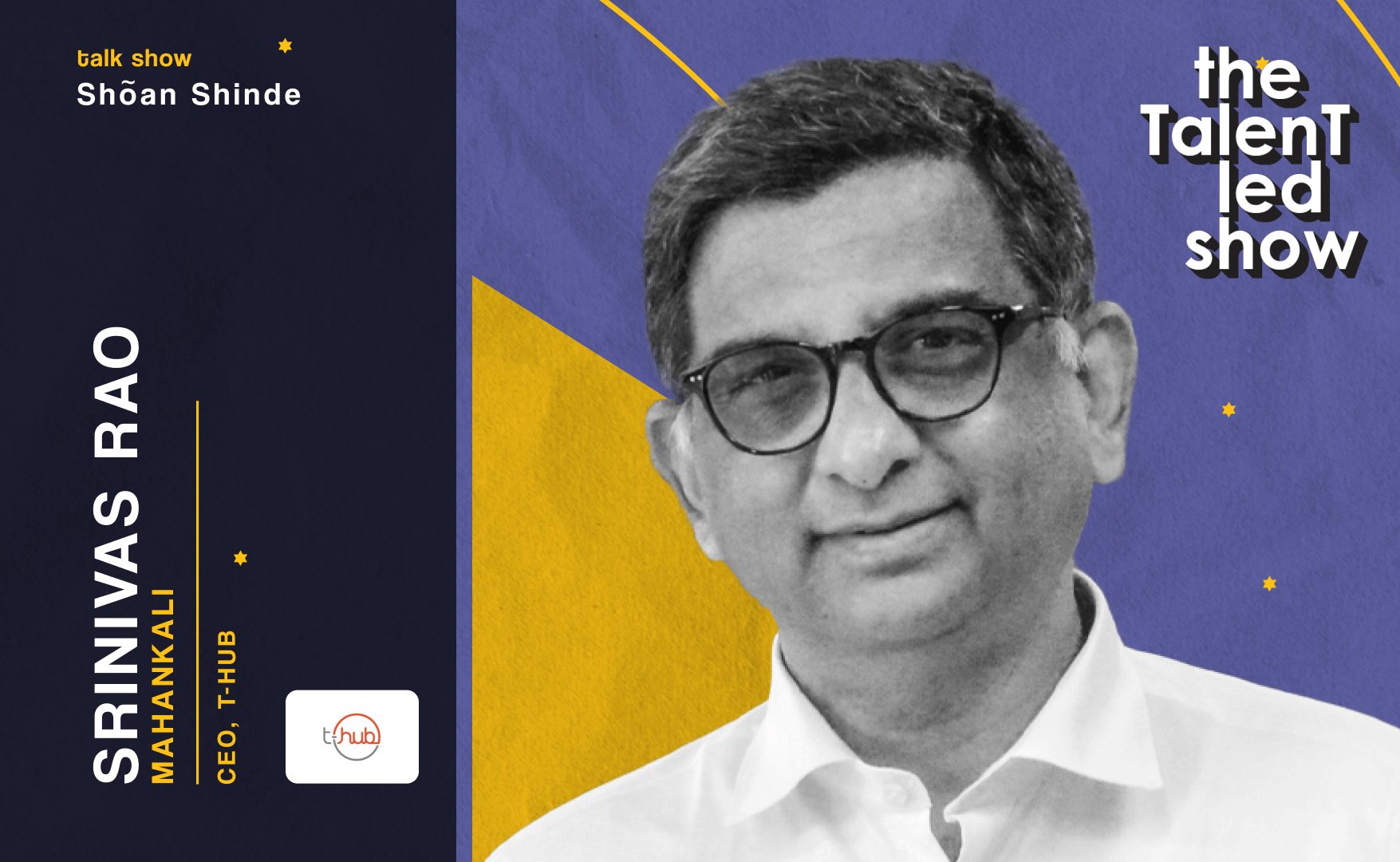
A Conversation with Srinivas Rao Mahankali on Entrepreneurship, Startup and Talent.

What do we do here at T Hub, and why is it unique?

https://fast.wistia.net/embed/iframe/a4bvakbbr9?videoFoam=true

T-Hub’s main goal is to encourage and promote entrepreneurship and innovation. T-Hub was founded in 2014 with 200 startups; now, there are nearly 7000+ startups, and there were only two incubators in 2014; now, there are 66. T-Hub has served as a model for the development of this entire ecosystem. This ecosystem includes the dean of ISB, the vice chancellor of IIIT Hyd, and many more people who have raised close to $2 billion in funding, which distinguishes T-Hub.

“Being an entrepreneur entails being creative, taking risks, and pushing oneself” – MSR

What brought you to T-Hub?

I’ve been working for about 36 years now, and my career has actually been divided into three parts: the first 12 years, when I worked with others as a professional, the second 20 years as an entrepreneur, and the last four years, when I sold my last start-up in 2019. Then I realized, you know, when you do something on your own for the first time, you say, “Listen, I want to show it can be done both ways.”
You do it again to demonstrate that the first time was not a fluke.

I’ve been in Bangalore for 27 years, and I obviously spent a lot of my childhood and early education here. So I have deep roots here, and the opportunity to return home presented itself. So when this opportunity arose, I decided to return here, and I’ve now been here for about 18 months. And I think it’s fair to say that I enjoy what I do because I get to meet so many, so many bright young people with lots of ideas.

Where else will you get the chance to collaborate with them, help them, learn from them, lead them, coach them, and truly have an impact on how they may develop and grow their businesses? That is the reason I’m here.

What is entrepreneurship to you?

https://fast.wistia.net/embed/iframe/ywu1xwhymm?videoFoam=true

Entrepreneurship is about being creative, taking risks, and pushing oneself. Entrepreneurs are risk-takers, inventive problem-solvers, and risk-takers. They are ferociously driven by a desire to alter the current situation if you like.

Also hopefully, freedom in the sense that you should have the opportunity to mold the world in the manner that you see fit, constrained only by what others want you to do.

Nobody talks about failure; everyone only discusses successes. Do you have an incident of a learning opportunity that did not go as planned?

https://fast.wistia.net/embed/iframe/xnfen416t8?videoFoam=true

Entrepreneurship is similar to farming in that you cannot control, for example, how much rain or sunshine will fall. You have no control beyond the point; you don’t know how the crop will grow, but you must be patient. So you have to put in the effort, do the hard work, and then collaborate to create an outcome.

“Entrepreneurship is similar to farming in that you cannot control it; you must be patient, put in the effort, do the hard work, and then collaborate to achieve success.”

Is there a future plan, or does it fall within the scope of going more national in terms of expanding the startup ecosystem to other cities, and other metros?

https://fast.wistia.net/embed/iframe/ijenciq1sr?videoFoam=true

We are working with more than six states in India, and they can see what we are doing and witnessing. So, if T-Hub can step in, contribute, and offer, basically, we have a decent playbook that they could maybe pick up and utilize to reproduce from, it will cut down on the amount of time it takes for them to become actively operational and influence certain results.

Are there any plans to scale this ecosystem, given its association with large corporations?

https://fast.wistia.net/embed/iframe/mgl24bhv4z?videoFoam=true

T-Hub is currently working with close to 15 huge firms, and one of their issues is that, by their very nature, large companies succeed. Nevertheless, there are two aspects to what they are attempting to accomplish. The first is how can they manage their current businesses more efficiently, and the second is what changes are necessary to make to the firm to enable scaling and growth. People now realize that some of their businesses must undergo drastic model changes as a result of all of this. Considering everything that is going on in the startup scene, we can certainly innovate within our own borders. Startups are quick, nimble, flexible, and able to complete tasks quickly. They are not hindered by red tape.

Do startups serve as legal solutions for corporations?

There are numerous scenarios, thus in some circumstances, they can sell to corporations, in others they can sell through corporations, in which case they jointly enter the market, and in still other scenarios they can receive finance from corporations.

https://fast.wistia.net/embed/iframe/dd8jvmw6ke?videoFoam=true

Is there a possibility to share and exchange talents between their country and ours?

We have many exchange programs, and startups from different markets visit us to learn what is going on in the ecosystem and how they may benefit from it. Similar to this, we have dispatched our start-ups to markets outside the US; in fact, as of last week, nine of our companies were in Japan; once they are there, we’ll have start-ups from Korea and Australia.

What’s the difference that you are seeing between a millennial entrepreneur and a Gen Z entrepreneur?

https://fast.wistia.net/embed/iframe/yb5u90u3fv?videoFoam=true

I believe that today’s entrepreneurs, particularly young entrepreneurs, have access to information that was previously unavailable. Previously, information was a source of power. That information asymmetry no longer exists. And today’s youth have much more access to information and are very sharp. They are extremely curious. Access to anything you want and all of these new-age technologies create enormous opportunities for them.

“I think that today’s entrepreneurs, especially those in the Gen-Z generation, are very intelligent and curious about things, and they have access to information that was previously unavailable. This attitude will open doors for them.”

https://fast.wistia.net/embed/iframe/49cnc5pm08?videoFoam=true